…Trains Journalists on Ecological Fund Reporting
The Clement Isong Foundation has expressed concern over the mismanagement of ecological funds in Akwa Ibom State, cautioning that every kobo diverted could translate to displaced families, flooded streets, and devastated communities.
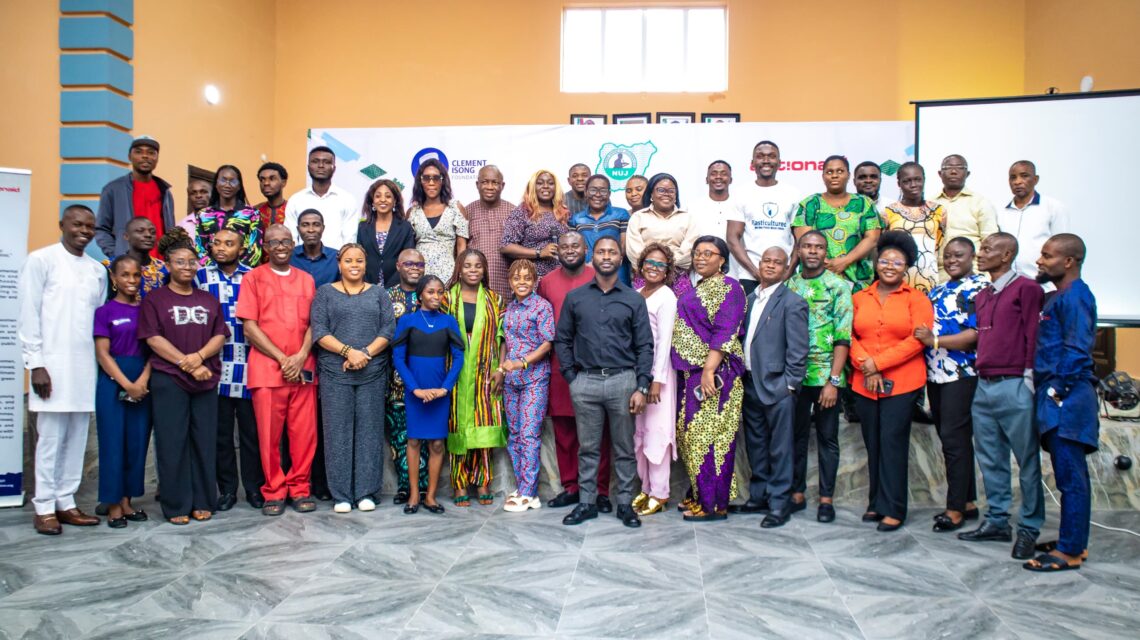
Dr. Caroline Gordian, Project Manager of the Foundation, made the remarks during a Multi-Stakeholders Engagement on Accountability and Effective Utilization of Ecological Funds, held at the NUJ Press Centre, Information Drive, Uyo.
In her address, she noted that despite yearly allocations, oil spills in Ibeno and Eastern Obolo remain unresolved, while flooding continues to displace families in Etinan and Uyo, adding that coastal erosion in Mbo and Oron, as well as barren farmlands in rural communities, highlight the failure of government agencies and contractors to deliver effective ecological interventions.
According to Dr. Gordian, ecological challenges are not mere statistics but daily realities that threaten lives and livelihoods. “Every kobo diverted or mismanaged means another flooded street, another displaced family, and another fishing community left with no hope,” she said.
She explained that the training which was for 30 Journalists in the state is to help stakeholders, and civil societies to break the culture of secrecy and prioritize the well-being of affected communities through fact-based reporting and accountability.
In his address, the Chairman, Nigeria Union of Journalists, Akwa Ibom State Council, Comrade Nsibiet John, commended the Clement Isong Foundation for partnering with the Union to train journalists on ecological fund reporting, while asserting that the training would equip members with the knowledge needed to track ecological funds and hold leaders accountable.
He encouraged participants to pay attention to the facilitators and apply the lessons learned to ensure timely and accurate reports on ecological fund management and related interventions.
The Programme Officer of the Foundation, Mr. Justus Etuknwa, who presented a paper on “Overview of SPA II Project & Strategic Priorities” outlined key governance actions and emphasized the need for collective responsibility in ecological reportage.
Also speaking, Investigative Journalist, Mr. Ekemini Simon, in a presentation on “Overview of Ecological Realities in Akwa Ibom State and Ecological Funds,” explained the processes of fund disbursement from the Federal Government to states, as well as the sharing formula between the state, the Niger Delta Development Commission (NDDC), and local governments, stressing that the NDDC has a crucial role to play in ecological interventions.
He, however, lamented that despite the huge sums allocated, neither the government nor the NDDC has clearly identified the projects executed with the funds, but maintained that the training aimed to educate journalists on effective mechanisms for ecological reporting.
Mr. Simon also handled a Presentation and Launch of Policy Brief “Strengthening Accountability and Effective Utilization of Ecological Funds in Akwa Ibom State,” offered concrete and key policy recommendations for effective reportage.
Another facilitator, Mr. Okodi Okodi, spoke on “Strengthening Media Capacity in Public Finance Reporting”, while some youth advocates including Joseph Nkanan, Victoria Effiong, Lucy Eyo, and Helen Eyo shared grassroots experiences of ecological, health, and security challenges in Esit Eket, Ibeno, and Oron communities.
The engagement also featured the presentation and official launch of the Foundation’s Policy Brief, which captured key findings, voices, and recommendations aimed at strengthening ecological governance in Akwa Ibom State.